Eugene Oneguine
Eugene OneginEugene Oneguine is the central figure of the novel, a young man born beside the Neva whose movement from fashionable society to country estate, from friendship to lethal conflict, and finally to a hopeless return gives the narrative its decisive arc. He is introduced in motion, hurrying through clouds of dust at postal pace; by the end, the man who once refused Tattiana Larina’s love is left confronting her marriage and her request that he leave her forever. The distance between those moments is measured less by travel than by opportunities he has failed to recognize until they are irrecoverable.
Identity and Background
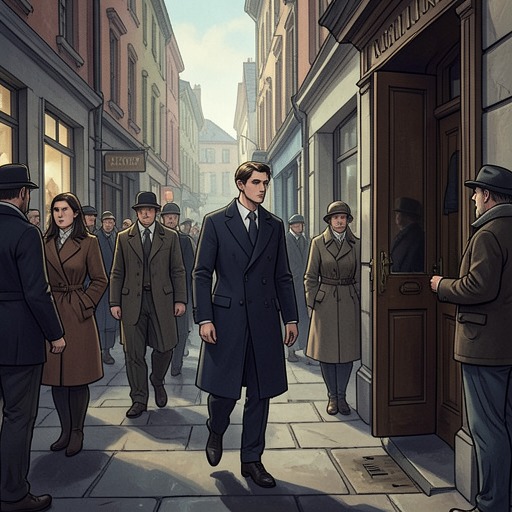
The narrator identifies Oneguine as the hero of the narration and places his birth beside the Neva. The opening image of a young man driving at postal pace through clouds of dust makes his entrance kinetic, but the text also frames his life through the institutions and habits of inherited privilege. His father, after faithfully performing his duties, falls deeply into debt; nevertheless, he gives three balls each year. The contrast introduces the social world that has formed Oneguine: outward display continues even as the family’s finances deteriorate.
The evidence presents him as a young man whose life is shaped by the expectations of his class, rather than by a stated vocation or self-chosen purpose. The recurring description of him as “our Oneguine” keeps the character close to the narrator’s conversational voice, while the narrator’s address to gentle readers makes his story feel at once personal and publicly observed. His importance lies not in a single fixed identity but in the sequence of roles the poem puts under pressure: young heir, rural landholder, friend, duelist, wanderer, and late suitor.
From Inheritance to the Country Estate
Oneguine’s circumstances change when he takes possession of a country estate that includes mines, meadows, woods, and lakes. The scale and variety of the property mark a sharp shift from the opening account of his father’s debt and annual balls. The inheritance gives Oneguine a concrete place in the rural world and supplies the setting for his contact with Vladimir Lenski, whose marriage-minded intentions toward Olga Larina are also noted in the narrative.
The change in setting does not become a settled life. The narrator recalls that Oneguine had planned to set out with him and visit foreign lands, but Fortune separates their paths. This abandoned plan gives travel a double meaning in the character’s arc: departure once belonged to shared expectation, while later movement follows the irreversible break with his friend. The gap between the intended journey and the life that actually unfolds underscores how little control Oneguine has over the consequences of his choices.
Friendship, Honor, and Lenski’s Death
Oneguine’s connection with Lenski becomes the central relationship in the tragic turn of his story. The evidence records Lenski’s desire not to break his matrimonial vows and his wish to pursue marriage, setting his attachment to Olga against Oneguine’s role as his friend. That friendship does not protect Lenski from the duel that ends his life. At the decisive moment, Lenski closes his left eye and takes aim; Oneguine fires, and the poet falls silently, his hour sounded.
The aftermath makes the killing more than a sudden reversal in the action: it becomes the defining fact through which the narrator later asks readers to take up Oneguine’s story again. Oneguine has killed his friend, and his mind has nothing to engage it. The movement from a shared plan to travel toward a friend’s death gives his later wandering a consequence, not merely a change of scenery. What might have remained an episode of youthful companionship becomes an enduring rupture that shadows the rest of his life.
Return to Tattiana and the Final Refusal
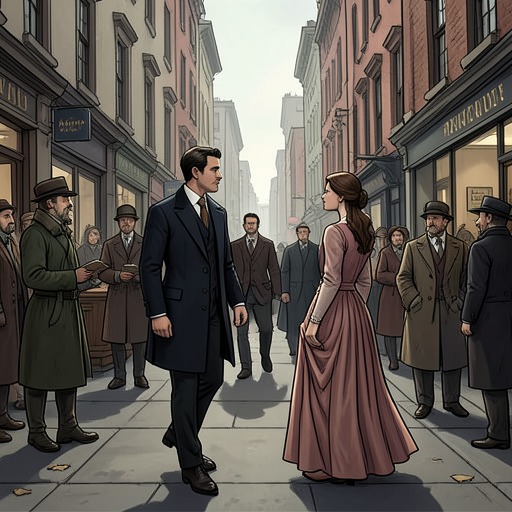
After the killing and the period of aimless wandering, Oneguine gallops toward Tattiana. The narrator signals that his destination is already apparent to the readers, presenting the return as the culmination of an established story rather than an unrelated new pursuit. Oneguine’s arrival brings the earlier relationship back into focus, but it cannot restore the moment when Tattiana’s love was first offered and refused.
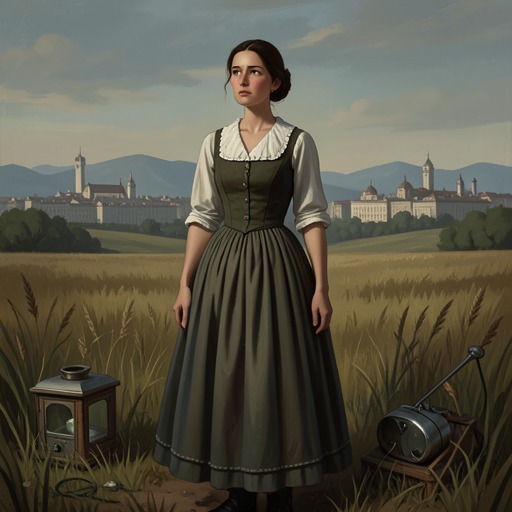
Tattiana’s final words establish the terms of their separation. She identifies herself as married, supplicates him to leave her forever, and acknowledges that his heart possesses inflexible honor and pride. Her appeal joins personal feeling to a boundary she will not cross: whatever remains between them, she insists on her marriage and asks for a permanent parting. Oneguine’s return therefore ends not in reunion but in recognition of a loss he cannot reverse.
Narrative Role and Significance
Oneguine’s arc is structured by contrasts between intention and outcome. He plans travel with the narrator but is separated from him; he possesses a country estate yet acquires no lasting purpose there; he shares a friendship with Lenski and then kills him; he returns to Tattiana only after her life has taken a direction that his earlier refusal helped make possible. Each reversal converts a possibility into a consequence, making belated awareness the governing pattern of his story.
The narrator’s framing keeps that pattern visible. He introduces Oneguine as the hero, calls him “our Oneguine,” and later explicitly invites the reader to take him up again as the man who has killed his friend and reached a state of mental vacancy. At the ending, the narrative gives the last decisive words not to Oneguine but to Tattiana, whose insistence on leaving her forever fixes the limit of his return. The central figure’s significance lies in this unresolved passage from privilege and motion to damage and belated desire: the story follows a man who can travel, inherit, and return, yet cannot recover what his actions have made final.